Central retinal vein occlusion (CRVO) is a differential for sudden painless loss of vision.
Risk factors
- increasing age
- hypertension
- cardiovascular disease
- glaucoma
- polycythaemia
Features
- sudden, painless reduction or loss of visual acuity, usually unilaterally
- fundoscopy
- widespread hyperaemia
- severe retinal haemorrhages - 'stormy sunset'
A key differential is branch retinal vein occlusion (BRVO) - this occurs when a vein in the distal retinal venous system is occluded and is thought to occur due to blockage of retinal veins at arteriovenous crossings. It results in a more limited area of the fundus being affected.
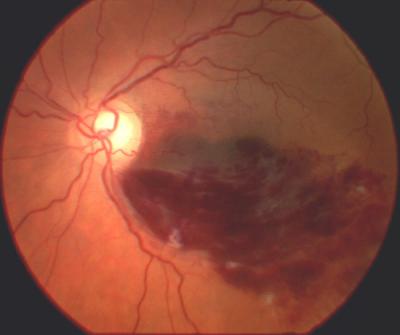
Fundoscopy showing branch retinal vein occlusion

Fundoscopy image showing a central retinal vein occlusion
Management
- the majority of patients are managed conservatively
- indications for treatment in patients with CRVO include:
- macular oedema - intravitreal anti-vascular endothelial growth factor (VEGF) agents
- retinal neovascularization - laser photocoagulation
Central retinal vein occlusion
- incidence increases with age, more common than arterial occlusion