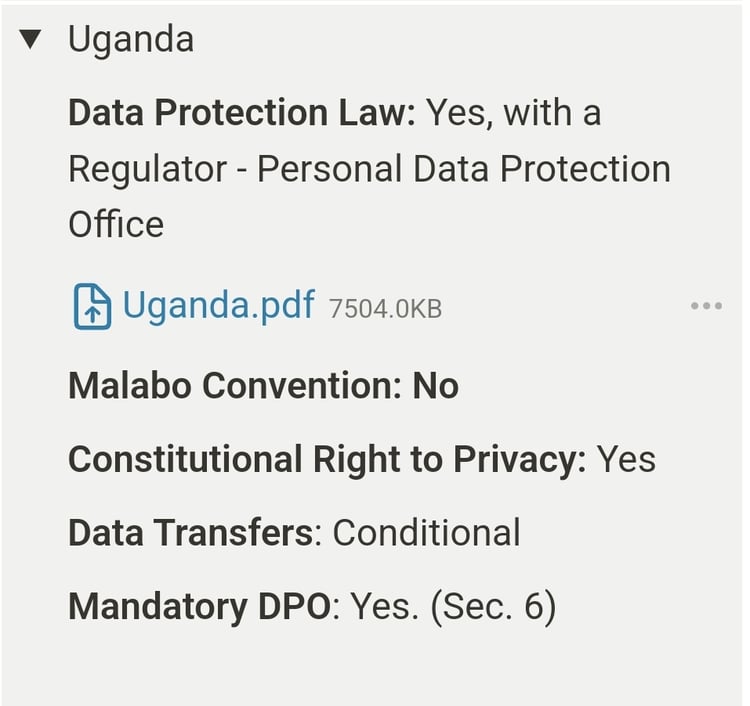
Section 26(3) of the Uganda Data Protection & Privacy Act, 2019 (UDPA19) introduces an intriguing provision that allows data subjects to enter into agreements for the use or processing of their personal data for a commercial benefit.
This provision raises questions about the balance between data protection and individual autonomy, as well as its implications for privacy rights and commercial transactions.
<aside> ⚖️
Access Africa Country Data Protection Laws and Country Fact Sheets
</aside>
Section 26(3) of the UDPA19 states that "...a data subject may enter into agreement with a data controller for purposes of using or processing his or her personal data for a pecuniary benefits."
This provision essentially allows individuals to consent to the use or processing of their personal data in exchange for financial gain. It acknowledges the autonomy of data subjects to make informed decisions about the usage of their personal information, even if it involves commercial transactions.
The inclusion of Section 26(3) grants data subjects the freedom to monetize their personal data.
This can be particularly beneficial for individuals seeking additional income streams or those willing to trade privacy for financial compensation.
However, it also raises concerns about the potential exploitation of personal data and the need for robust consent mechanisms to ensure that individuals fully understand the implications of their decisions.
Section 26(3) introduces new opportunities and challenges in the realm of data processing. It allows companies to engage in commercial transactions with data subjects directly, offering monetary incentives in exchange for access to personal data.
<aside> 📖
Access Country Determinations/Rulings
</aside>
This can lead to innovative business models centered around data monetization, but it also requires strict adherence to data protection principles and compliance with legal requirements outlined in the Data Protection Act.
While Section 26(3) of the UDPA19 appears to be unique in its explicit provision for pecuniary benefit in exchange for personal data usage, similar principles exist in other jurisdictions.
For example, in the United States, the concept of "data brokerage" allows individuals to sell their personal data to third-party companies for marketing purposes. However, the regulatory landscape surrounding data brokerage varies across states, with some enacting specific laws to regulate the practice and protect consumer rights.
In Europe, under the General Data Protection Regulation (GDPR), individuals have the right to consent to the processing of their personal data, including for commercial purposes. However, the GDPR places stringent requirements on obtaining valid consent, ensuring transparency, and protecting individuals' rights over their data.
<aside> 💡
Looking for expert guidance on data protection compliance?
At MZIZI Africa, we specialize in helping organizations navigate the complexities of data protection laws, including Kenya’s Data Protection Act 2019. Whether you need assistance for cross-border data transfers, training your teams on compliance, or developing robust data protection strategies, our consulting and training services are here to support you. Let us help you stay compliant and protect your business.
📧Contact us today at [email protected] to learn more.
</aside>
Section 26(3) of the UDPA19 introduces a novel approach to personal data usage by allowing data subjects to enter into agreements for pecuniary benefit. While this provision offers individuals greater autonomy and potential financial gain, it also raises important considerations regarding privacy rights, consent mechanisms, and ethical data practices.
As businesses navigate the evolving landscape of data protection and commercial transactions, it is crucial to strike a balance between innovation and safeguarding individuals' rights to privacy and data protection.