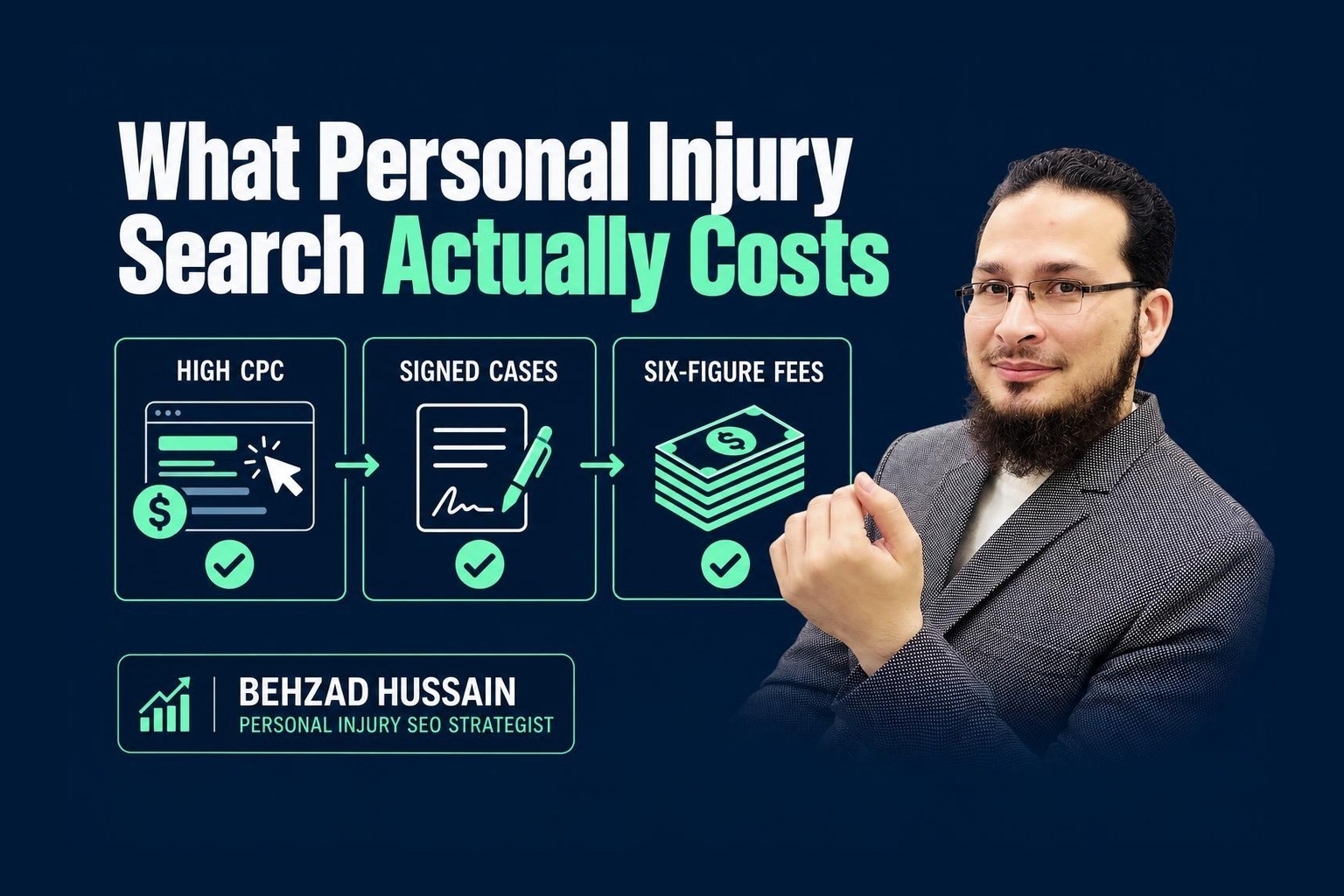
Personal injury is the most expensive vertical in search because the unit being fought over is not a click. It is a signed case that can carry a six-figure fee, purchased through clicks priced like nothing else online. Understanding those economics, really understanding them, changes how a firm evaluates every marketing invoice it receives. This piece walks the numbers I use and publish, and the strategic conclusions they force.
The US personal injury market ran $61.7 billion in 2025, contested by more than 164,000 PI attorneys. Those two numbers, which I keep on my own services pages because they frame everything, explain the auction dynamics: an enormous prize, an extremely crowded field, and a client who hires once, urgently, with no loyalty to anyone.
When that many well-funded competitors bid on that valuable and perishable a client, the price of attention goes vertical. And it has.
The working figures I publish: commercial personal injury clicks run $100 to $300, and a signed case from paid channels runs $1,000 to $5,500 all-in.
Pause on the click number, because owners hear it and nod without doing the arithmetic. At $100 to $300 per click, a page that converts poorly is not a design problem. It is a furnace. Ten clicks that bounce off a slow, confusing practice page can cost more than a nice dinner for the whole intake team, and they happen silently, all day.
This is why I bang on about the unglamorous foundations. In my audit of 1,005 page-one PI firms, the median mobile render time was 5.5 seconds. At this vertical's click prices, every second of that delay is among the most expensive latency in commercial existence. The injured person in a parking lot does not wait, and the firm just paid three figures to learn that.
$1,000 to $5,500 to sign a case through paid channels is a rational price when a case fee can run five or six figures. The arithmetic works, which is why the whole vertical leans on it.
But most firms cannot actually produce their own version of that number. They know total spend. They rarely know signed cases by channel, because intake attribution is the least loved system in the building. In my Scorecard's fourth pillar, the case acquisition questions are the ones owners most often answer "not sure" to. A firm that cannot compute its own cost per signed case by channel is negotiating every vendor contract blind, in the most expensive market there is.
If you do one operational thing after reading this: make intake record, for every qualified inquiry, which channel produced it. One field. It converts every future marketing decision from folklore to arithmetic.
Here is what the click prices make strange: the expensive auction sits directly on top of an unclaimed structural layer.
Everyone pays for the traffic. Almost nobody finished the foundation the traffic lands on. Zero of the 1,005 page-one firms in my audit completed the structural work that search engines and AI answers read first; 663 were structurally absent altogether. Only 35.3 percent even declare themselves a legal service in machine-readable form.
That mismatch is an arbitrage. Organic visibility in this vertical carries the same effective value as the paid clicks it substitutes for, at $100 to $300 apiece, and compounds instead of expiring. A single practice page that earns even a modest stream of qualified organic visits is doing work that would cost thousands monthly at auction prices. The barrier to that page was never budget. It is the months of unglamorous work nobody sustains, which is exactly why the discount is still on the table.
Three tests, courtesy of the economics.
The substitution test: for any proposed spend, ask what the same money buys at $100 to $300 a click, and whether the proposal builds anything that outlives the invoice. Some rent is fine. Unlabeled rent is not.