
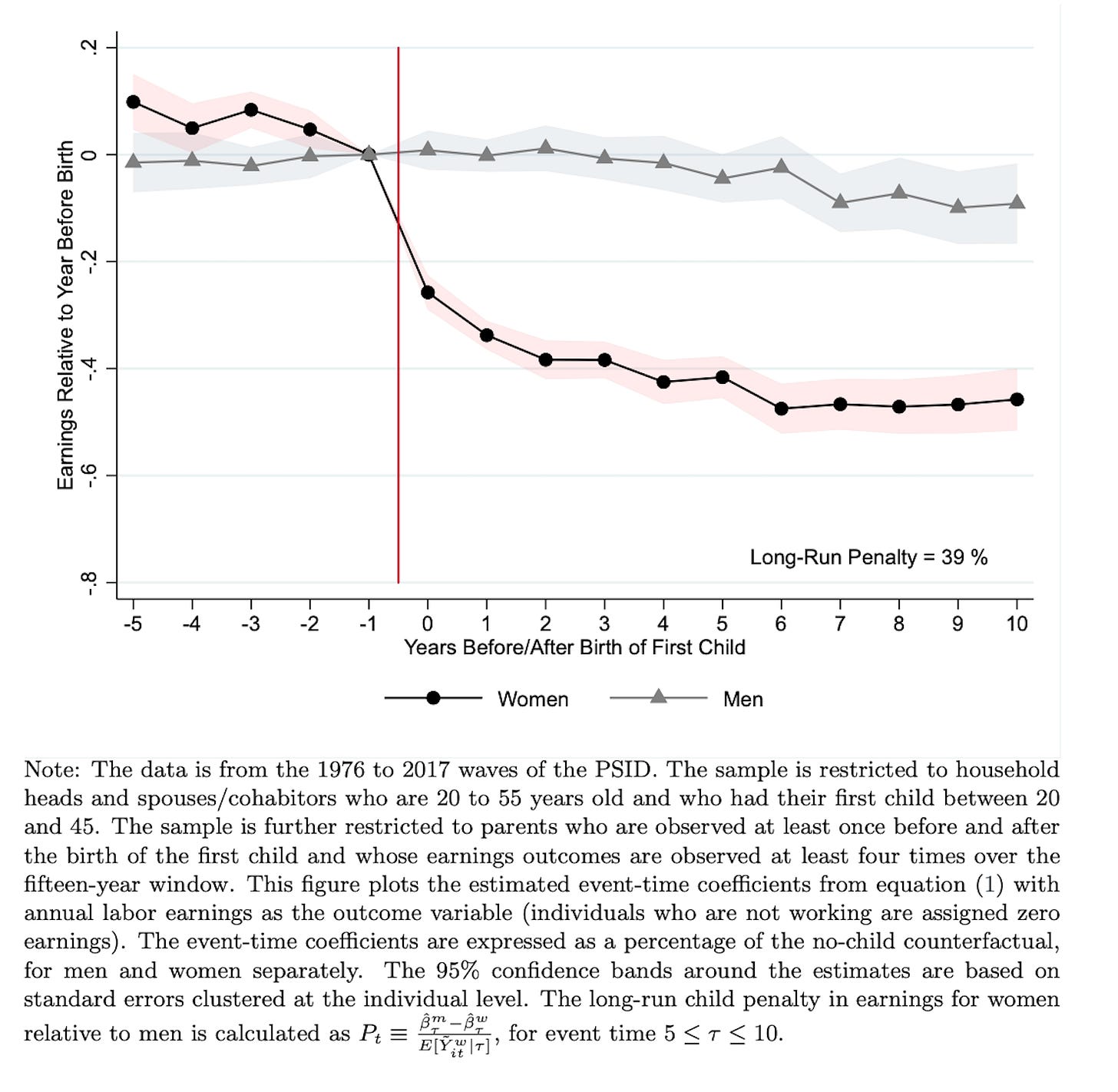
Mothers on avg reduce their earnings by 25% or more after 10 years of having a child, while men’s earnings remains pretty much the same.
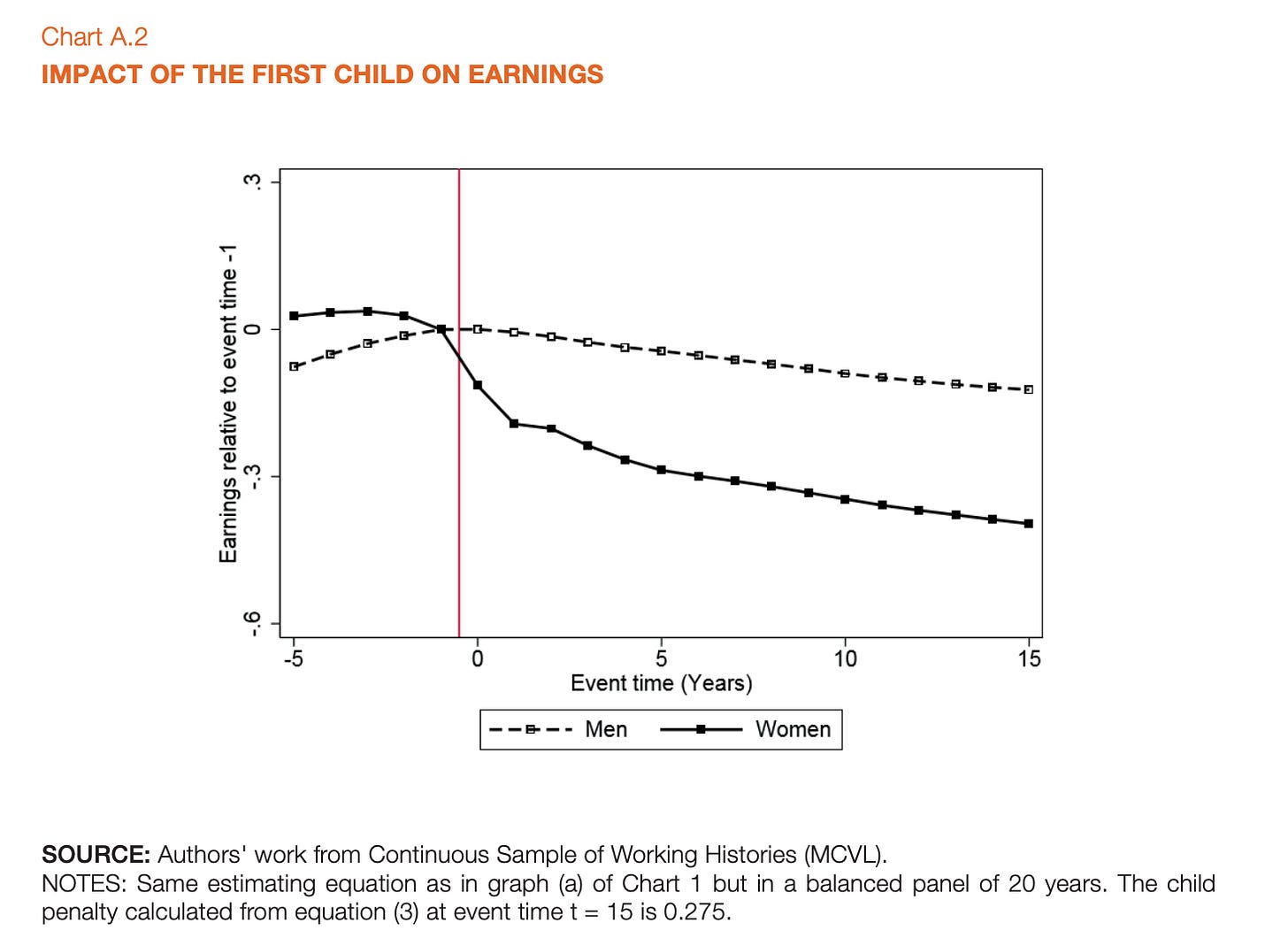
This fact seems pretty consistent in 2 different studies released this year by the Bank of Spain (chart above) and a paper with US data (chart below).
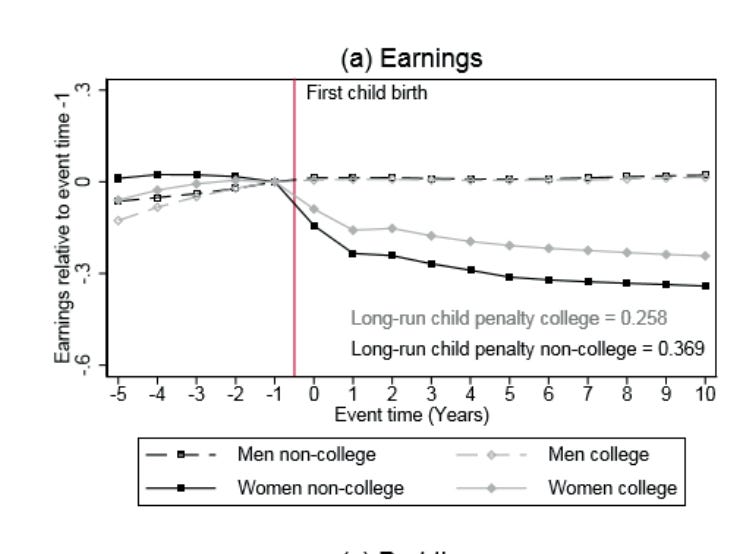
The trend doesn't change much for those women with a college degree, although the effect seems lower.
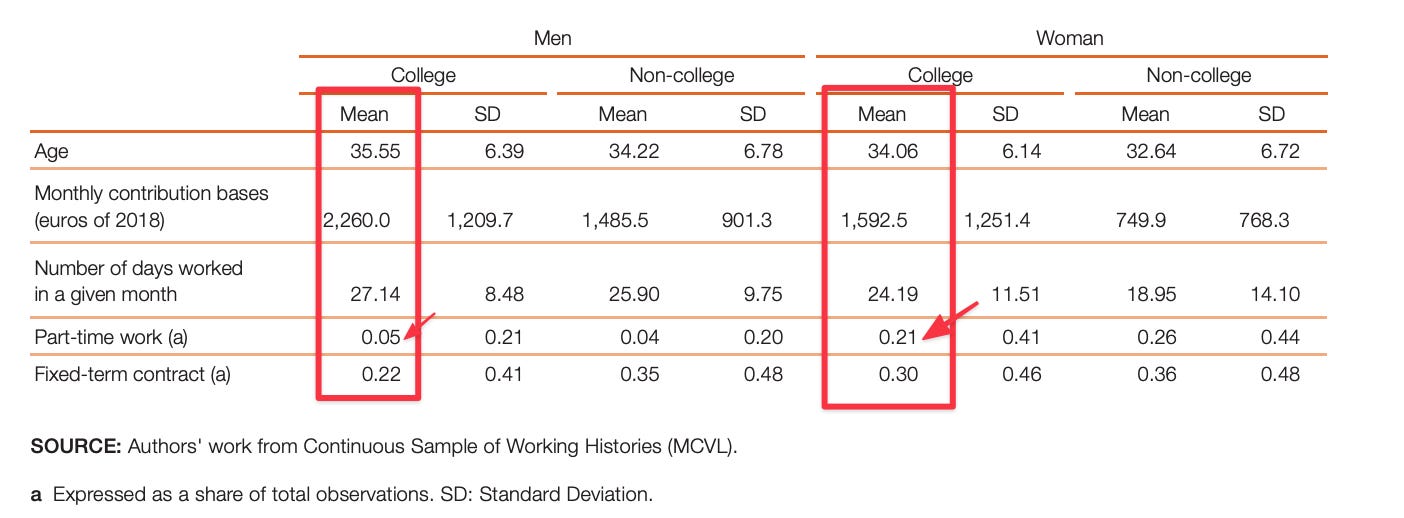
Why? Most women reduce their working hours drastically after having children. Many of them start working part-time, even if they have a college degree (21% of women vs. 5% of men). Is this a preference, or they feel forced by cultural norms or their husbands? I am afraid this data can’t answer that question.
Paradoxically, there are now more educated and highly skilled women in the job market than men, and they make more money than men before having children.
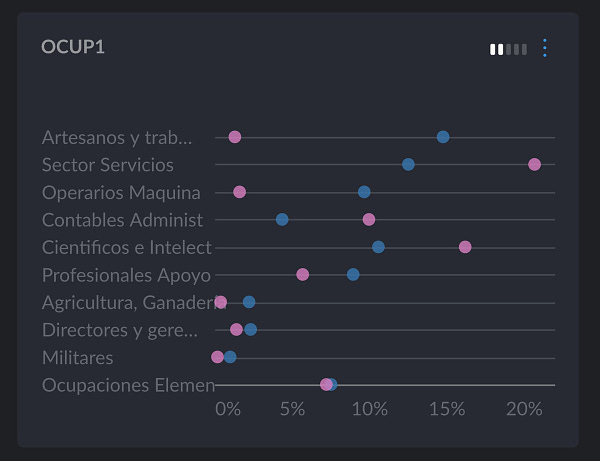
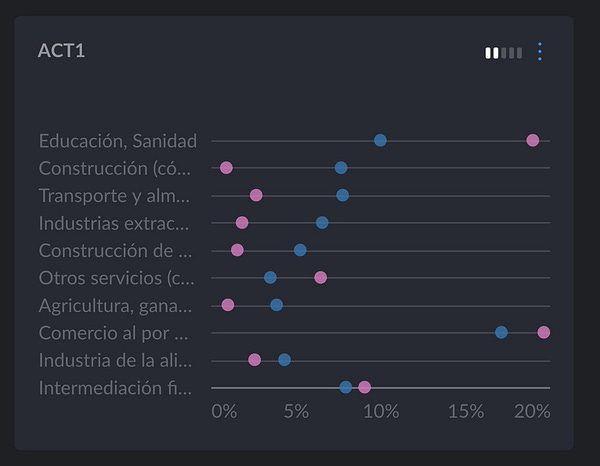
[Victoriano Izquierdo @victorianoiMirando con microdatos de la última EPA en @graphext las ocupaciones y actividades donde más diferencia hay de hombres y mujeres de 20 a 44 años.
Ya hay muchas más mujeres jóvenes en España que hombres trabajando en profesiones de alta cualificación...
Mini-hilo 👇 7:07 PM ∙ Jan 6, 202062Likes54Retweets](https://twitter.com/victorianoi/status/1214262353602187264)
I will look for data about if men are starting to reduce their working hours and going for part-time jobs after becoming fathers in some countries and if women are starting to prioritize their careers over their families.
🔗 Source: Bank of Spain. The Child Penalty in Spain. (July 2020) & Children and the Remaining Gender Gaps in the Labor Market (October 2020)
Housing was much more affordable in the 90s than since the 2000s in Spain and the UK.