A breakdown of what we’ve done, what we’ve achieved in the year since the game’s announcement, and some useful links.
Hi, I’m Max, the writer of Deep Pixel Melancholy, a pixel art visual novel about being stuck in a time loop inside a far northern city.
By the beginning of July 2026, we had reached 27,000 wishlists, which I think is a pretty cool result for a visual novel, and for a first project in general. We didn’t spend any money on marketing, because we don’t have any, and we don’t have a publisher or sponsor either, so we did everything by hand.
This post is for developers, long-read lovers, and anyone interested in indie game development. Below, I’ll walk you through our journey and share some useful links. Let’s go.

The Game’s Journey Over One Year
Most of our Steam questions were answered by, surprisingly enough, Valve’s own guide. After that, we studied the Steam pages of similar games and used those references to make our own. Then we worked on the trailer and made it ourselves in a couple of weeks. After that, we prepared a press kit and started collecting contacts in advance, so we would know who we wanted to reach out to when the game was announced.
Important discoveries:
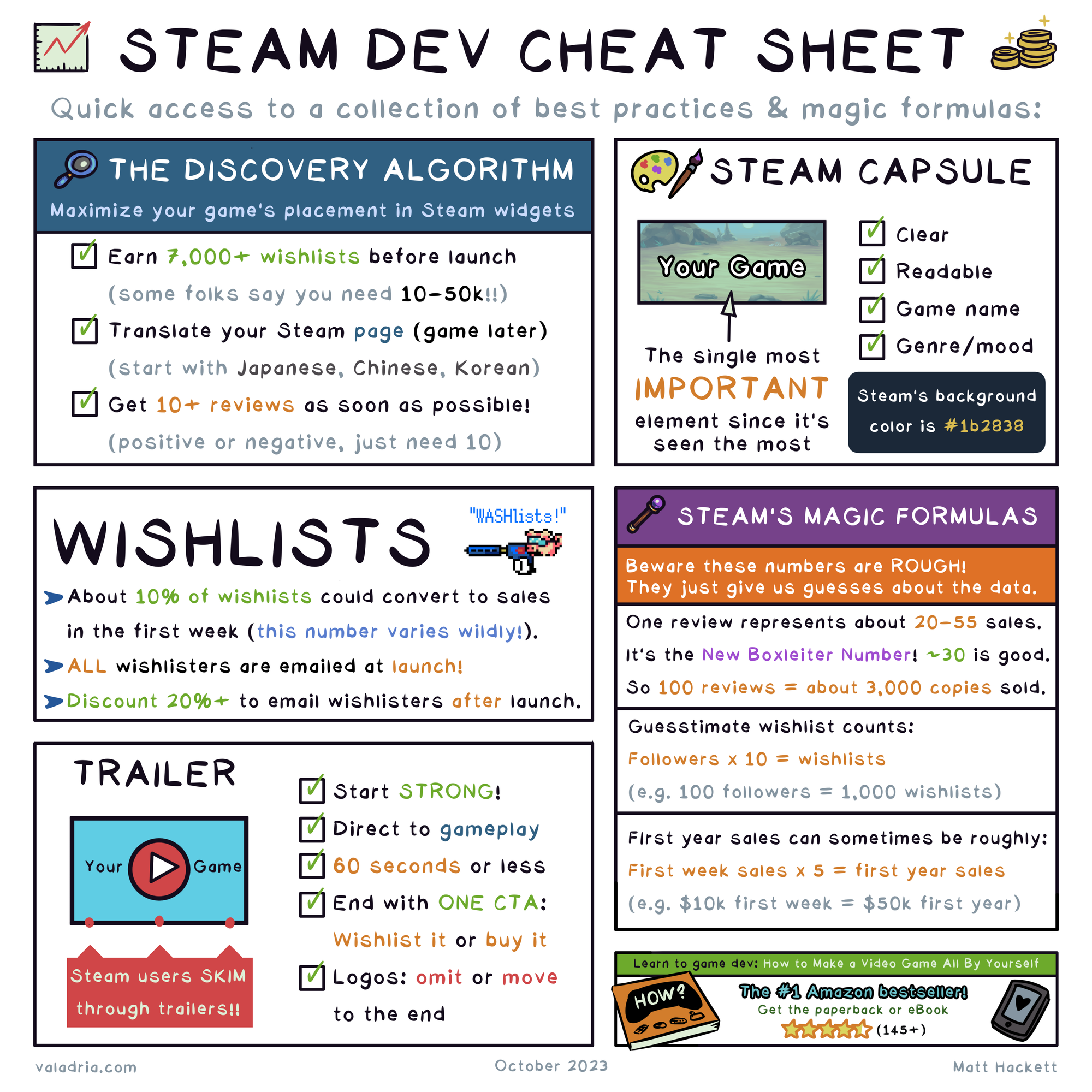
— Steam pages don’t have to be original, but they do need to look polished: it’s better to keep the text short, preferably no more than three lines under the capsule, make an interesting capsule, and add varied screenshots with different color spots. And don’t forget to translate the page into as many languages as possible. You can find a lot more details about Steam pages in this guide.
Life hack: if Steam Support asks you to write, for example, a dry description where everything is strictly to the point, but you want to break the fourth wall, you can do it “properly,” pass the first review, and then change it however you want. Any page changes after the first approval are no longer reviewed. This also applies to the demo.
— In trailers, the first 5 to 10 seconds decide everything. Never waste them on a black screen or a logo, like we did, lol. Either show the coolest thing right away or come up with a hook.
— A press kit is mandatory: later you’ll attach it to every email and every festival application. You can make a press kit by following an example you like. There’s no need to reinvent the wheel here. The main thing is to include screenshots, logos, teasers or trailers, and a press release with information about the game, the team, and contacts.
— Expanding your list of streamer, media, and influencer contacts is the most tedious and basically endless part of marketing work, but without it, people are unlikely to hear about your game, which means no wishlists, which means no sales, which means no money. I keep our list in a Google Sheet, and it looks like this:

I love keeping things organized. Makes it easy to navigate, even when the sheet has hundreds of rows
Conclusion: preparing for the announcement is an important stage of development, and it’s better not to neglect it. There’s one checklist on this topic that I like. Some parts of it are outdated, especially after Steam recently introduced the personal calendar, but it still helps set the right mindset.

https://www.valadria.com/content/images/2024/02/SteamDevCheatSheet.png — there are even more infographics and checklists on the website